

As discussed in my previous blog post, New York State is currently facing challenges with a high teacher turnover rate and a decreasing supply of new teachers. As seen in Figure 1, teacher retention is the lowest it has been in about a decade except for 20+ year teachers. This data matches up with the report from the Educational Policy Analysis Archives, the bulk of teacher attrition is due to beginning and mid-career teachers moving from one district to another or leaving the profession altogether. This is supported by particularly among novice educators. This attrition costs large districts up to $25,000 per departing teacher, compromises student learning and drains vital resources (NYSSBA, 2025).
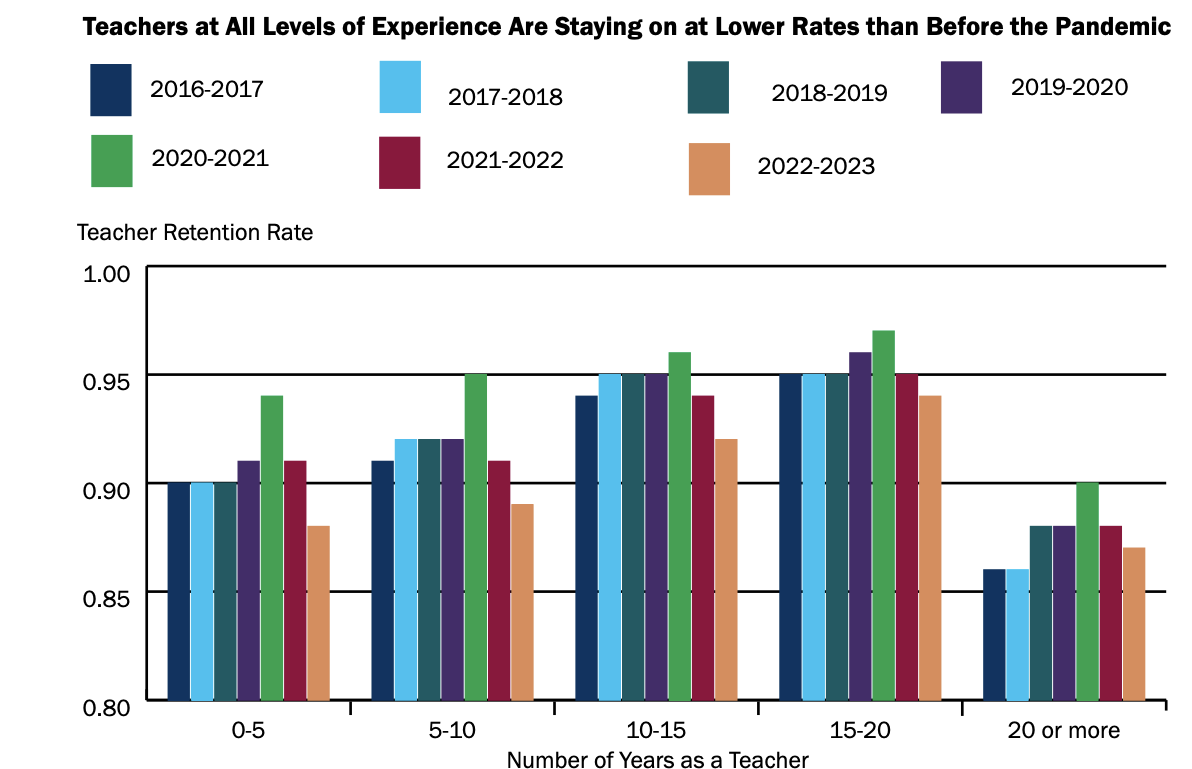
Figure 1. Teacher retention rates in New York City by years of experience, 2016–17 through 2022–23. Source: New York City Independent Budget Office (2023), Recent Trends in Teacher Retention and Hiring in New York City Public Schools
Facing a teacher shortage and declining teacher retention, the New York State Education Department has invested heavily in innovative programs. These innovations were outlined in this Learning Policy Institute article and their reporting will be used to frame this blog post. When reading this article, I kept questioning whether these initiatives would be effective in increasing teacher retention, especially in critical high-need subjects like mathematics. So I decided to examine New York statewide data alongside subject-specific outcomes and attempted to gauge the efficacy of New York’s investments.
New Teacher Mentoring and Support
New York State created the Mentor Teacher-Internship Program (MTIP) to mandate mentoring for all early-career teachers. On the surface, this mentoring program is a smart investment, given national evidence that teachers who receive high-quality mentoring leave at one-third the rate of teachers who receive none (Darling-Hammond, 2017). This need is particularly urgent in math, where many new teachers begin without a strong content background, especially in high-poverty schools in New York (Boyd et al., 2012).
The MTIP has structural requirements, including defined selection processes, mentor training, program evaluation, and assured release time for mentor activities. But this policy currently lacks an explicit equity lens in its design, which could perpetuate gaps in retention in the coming years. Based on the policy outlined by the New York State Legislature, none of the essential components explicitly mandate that districts address the equitable assignment of mentors or require specialized support focused on the needs of teachers of color. This omission is jarring in light of established equity concerns in New York. A 2021 study by The Education Trust highlighted that early-career teachers of color in New York were less likely to report receiving adequate mentoring compared to their White peers. This disparity creates a risk that new math teachers of color, who may be disproportionately placed in high-need schools, are left without the specialized content and instructional coaching required in a high-demand subject.
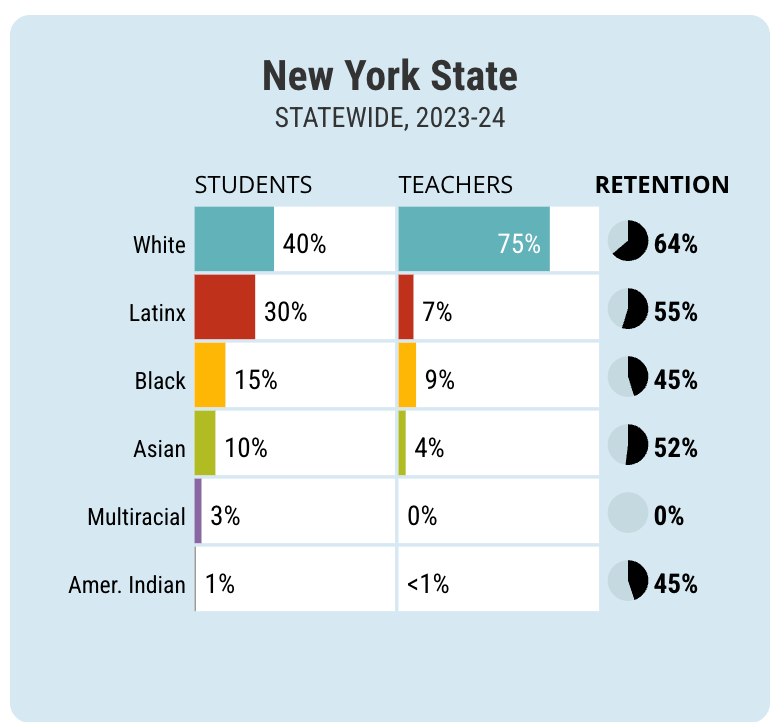
Figure 2: Shares of students and teachers by racial/ethnic groups are reported using data for the 2023-24 school year in New York State. 5-year retention rates for teachers cover school year 2019-20 to school year 2023-24. Source: The Education Trust–New York. (2025). Educator diversity tool. The New York Equity Coalition.
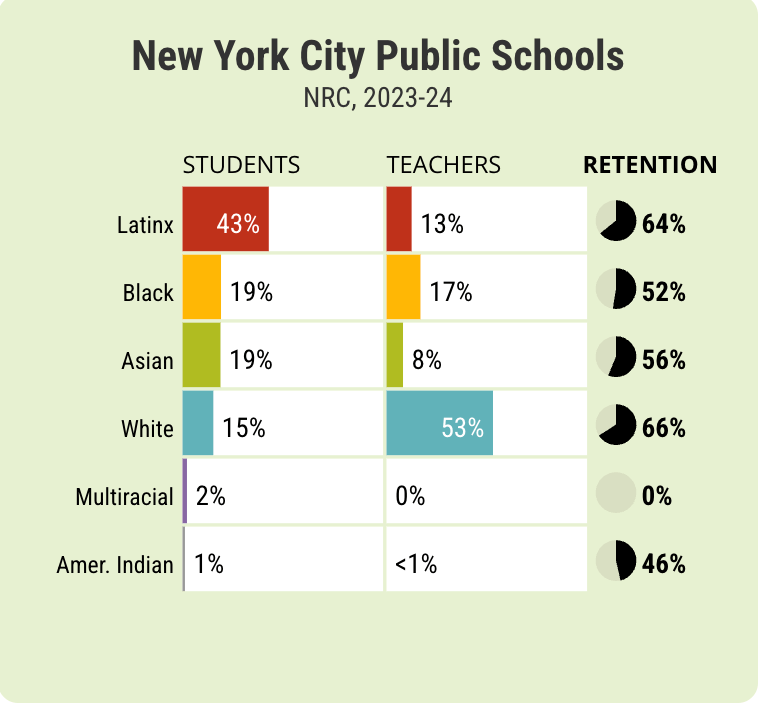
Figure 3: Shares of students and teachers by racial/ethnic groups are reported using data for the 2023-24 school year in New York City. 5-year retention rates for teachers cover school year 2019-20 to school year 2023-24. Source: The Education Trust–New York. (2025). Educator diversity tool. The New York Equity Coalition.
Based on Figure 2 and 3, New York State and New York City both have retention rates for minority teachers lower than their white counterparts. By failing to explicitly mandate equity metrics or training on culturally responsive mentoring, the MTIP runs the risk of perpetuating the very equity gaps it seeks to close. The program provides the opportunity for productive, supportive relationships, but without an equity mandate, it cannot assure that the support reaches the educators who need it most, particularly those crucial to building a diverse teaching workforce in math classrooms. Therefore, while the MTIP is correctly structured to improve overall retention, its current design may lack the necessary accountability mechanism to ensure equitable outcomes for the diverse cohort of teachers entering the New York workforce.
Equity Concerns
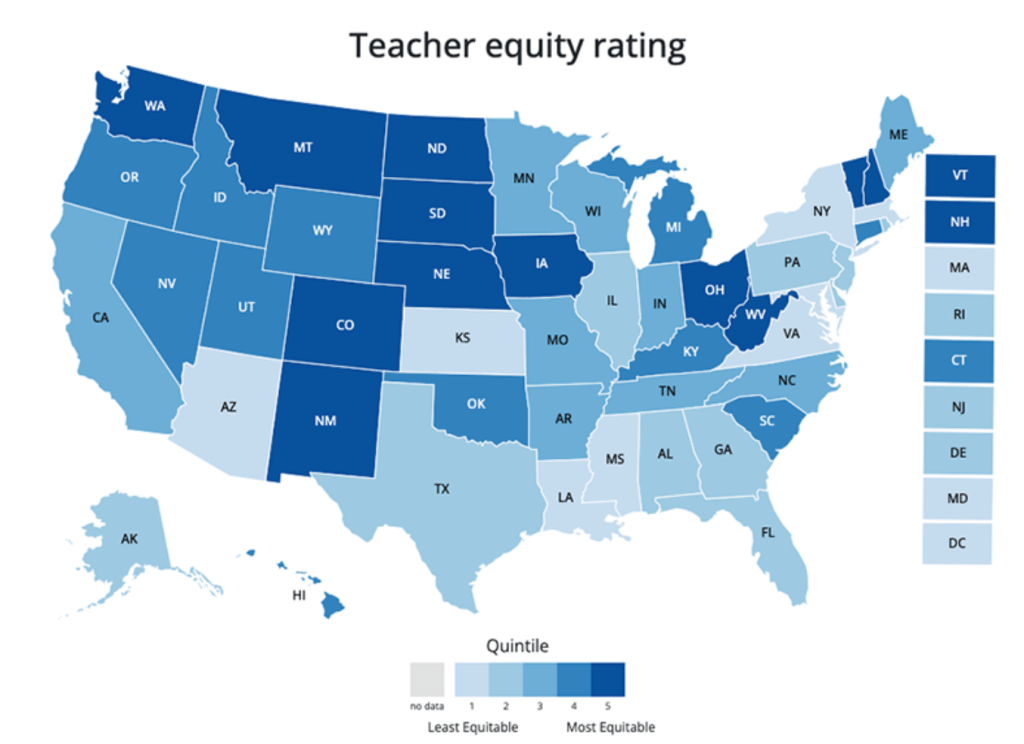
Figure 4: Teacher Equity Rating Across the United States, measuring the equitable distribution of certified and experienced teachers between schools serving high- and low-poverty student populations and high- and low-minority student populations (Learning Policy Institute, 2023)
The Learning Policy Institute’s national teacher equity index (Figure 4) places New York in the lowest quartile among all states for equitable distribution of certified and experienced teachers. This means:
- Students in high-poverty or high-minority schools are far less likely to have certified math teachers
- Those who do have math teachers are less likely to have teachers with 5+ years experience
- Staffing instability remains highest where math intervention is most critical
Therefore, without explicit equity guardrails such as subject-aligned mentor matching, required supports for teachers of color are lacking. and workload protections in high-need settings, New York’s mentoring mandates cannot guarantee support reaches the educators most at risk of leaving.
Closing
Mentoring is a vital part of teacher retention and New York has the infrastructure to get this right. But generic support will not solve a subject-specific crisis. If New York wants to stabilize its math workforce, ensure Algebra readiness for all students, and close systemic academic opportunity gaps, then MTIP must become equity-centered and accountability-driven. My next post will explore policy levers that New York can use to strengthen recruitment, improve working conditions, and retain excellent math teachers for the long term.
 Advancing Equity With Policy
Leave a comment