

On January 29th, 2025, the Trump administration issued an executive order that mandated educational institutions eliminate DEI programs or risk losing federal funding. The Ending Radical Indoctrination in K-12 Schooling Executive Order recommended eliminating all federal funding sources that “support or subsidize the instruction, advancement, or promotion of discriminatory equity ideology”. This order prevents federal funds from being used by any level of school or education agency for the advancement of DEI in “K-12 teacher education, certification, licensing, employment, or training” (The White House, 2025). Per this executive order, the U.S. Department of Education sent letters to schools and universities, instructing them to cease using race-based preferences in admissions, hiring, and other programs, beginning no later than February 28, 2025 (U.S. Department of Education, 2025).
The Executive Order and subsequent letter have been met with strong opposition from civil rights groups and educational leaders, who argue that it undermines efforts to recruit, train, and retain educators of color (Associated Press, 2025). One specific initiative that could be affected by this executive order is Title II, Part A of the Elementary and Secondary Education Act of 1965, which provides funding for the preparation, training, and recruiting of high-quality teachers and principals. The Title II, Part A program was designed to provide more access to effective and diverse educators to low-income families and minority students as a measure to ensure equity of educational opportunity (U.S. Department of Education).
Title II, Part A funds help improve teacher pay, expand certification pathways, provide professional mentorship, and diversify the educator workforce. (New Hampshire Department of Education, 2024) Several states have already developed initiatives using funding from Title II Part A. Mississippi is aiming for a graduation rate of 90% by 2025 but followed up by supporting districts in recruiting and retaining teachers of color who are prepared to meet these goals Their plan was to use Title II, Part A funds to increase the number of minority teachers by 25% in shortage districts. Tennesse uses these funds to provide grants to educational agencies to develop and implement recruitment plans to diversify the teacher pipelines. Tennessee’s DOE also published data reports that evaluated recruitment, retention, preparation, placement, and professional learning trends. (Partelow, 2018) California inputs $232 million of Title II Part A funding to reform certification programs, support new teachers, provide additional training for mid-career teachers and principals, and hire more teachers. (Berkeleyside, 2025)
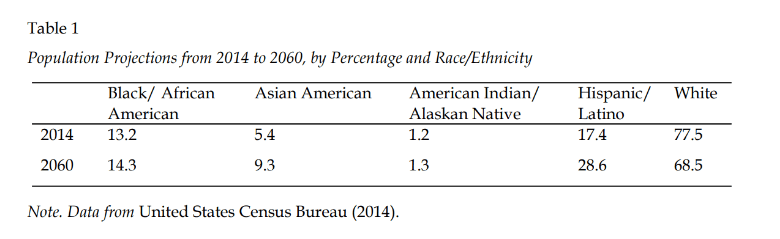
Over the past few decades, the student population has become more racially, ethnically, and linguistically diverse, but the teacher workforce has not reflected this change. Based on the Learning Policy Institute’s report, students benefit when they have a diverse cohort of teachers and principals. These benefits extend to all students, including white students, underserved students, and students of color. As student demographics shift to be increasingly diverse over the next 35 years, so should the teaching population (Table 1) (Learning Policy Institute, 2018)
The Trump Administration’s plan to eliminate DEI programs can pose a significant challenge for students, teachers, and principals of color. Using Title II Part A funding is essentially a DEI initiative that includes mentorship programs, professional development, and networks crucial for attracting and retaining educators of color. At present, our teacher workforce is not representative of our student population (Figure 1), and the loss of these programs may lead to increased turnover and decreased diversity among school staff. Already, the rate of teachers of color leaving the teaching profession is significantly higher than that of White teachers, as the annual turnover rate is at 45 %. (Carver-Thomas, 2019)
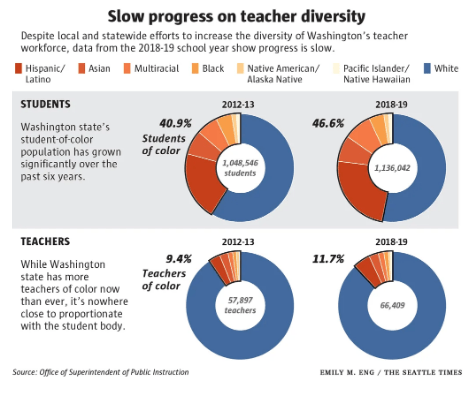
Figure 1: Seattle changes in student and teacher diversity over 6 years (Murakami, 2019)
If we are to increase the quality, quantity, and diversity of our teacher workforce, then policymakers must defend Title II, Part A, and its DEI-driven investments in teacher quality. Now is the time to act to ensure that every student has access to the teachers they need to thrive. Readers, join me in contacting our state education officials and legislators to urge them to prioritize teacher diversity funding at the state level, even if federal support is reduced. We can also advocate at our school boards for investments in mentorship, recruitment, and professional development programs for quality and diverse educators.
 Advancing Equity With Policy
Leave a comment